
Changes in the composition of retained earnings reveal important information about a corporation to financial statement users. A separate formal statement—the statement of retained earnings—discloses such changes. The par value of a stock is the minimum value of each share as determined by the company at issuance. If a share is issued with a par value of $1 but sells for $30, the additional paid-in capital for that share is $29.
- This account is a significant component of a company’s equity, reflecting the portion of earnings reinvested back into the business or held for future use.
- Businesses have various options for utilizing retained earnings, including reinvesting in the company, paying down debt, repurchasing shares, or distributing dividends.
- Retained earnings, as the name suggests, refer to the portion of a company’s profits that it chooses to retain rather than distribute to shareholders as dividends.
- We have completed the first two columns and now we have the final column which represents the closing (or archive) process.
- Then we translate these increase or decrease effects into debits and credits.
Shareholder Equity Impact
He started AnalystAnswers to provide aspiring professionals with accessible explanations of otherwise dense finance and data concepts. Noah believes everyone can benefit from an analytical mindset in growing digital world. When he’s not busy at work, Noah likes to explore new European cities, exercise, and spend time with friends and family. In step 1, we need to show the huge cash outflow from the company used to fund the big asset.
- Management and shareholders may want the company to retain earnings for several different reasons.
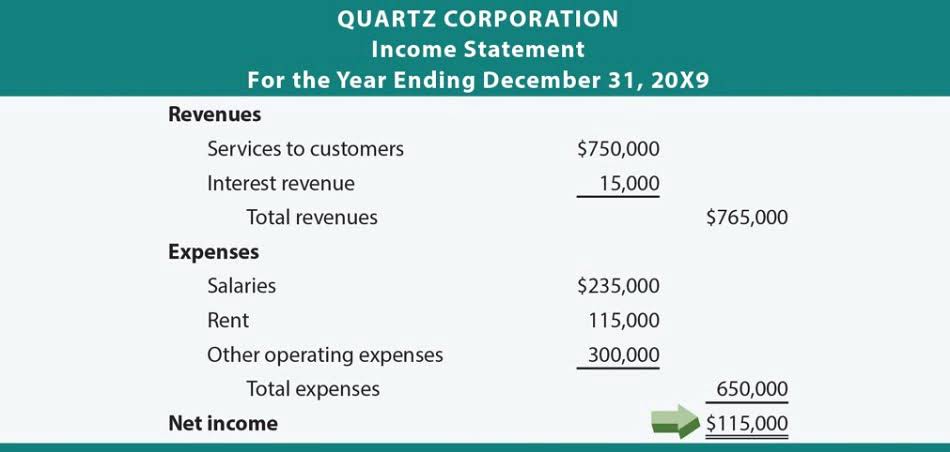
- Conversely, a net loss occurs when a company’s expenses exceed its revenues during an accounting period.
- If a share is issued with a par value of $1 but sells for $30, the additional paid-in capital for that share is $29.
- Asset accounts, which represent economic resources owned by the business, increase with a debit and decrease with a credit.
- Similarly, when a company declares and pays dividends to its shareholders, these distributions reduce the portion of earnings kept within the business.
- It involves paying out a nominal amount of dividends and retaining a good portion of the earnings, which offers a win-win.
Retained Earnings in the Investing Cycle
Now we’ve recognized current depreciation on the income statement, and we decreased our net assets to -$10,000 ($100,000 + -$10,000). Remember, at the end of the day, accounting is nothing more than following cash https://protraveljrs.com/2021/11/dealership-accounting-guide/ and goods & services in a company — the rest is details. When you understand how retained earnings works, you understand how all accounting works. Even though some refer to retained earnings appropriations as retained earnings reserves, using the term reserves is discouraged. Revenue is the total amount of income generated by the sale of goods or services related to the company’s primary operations. Revenue is the income a company generates before any expenses are taken out.
Example 5: Transferring a Portion of Retained Earnings to Reserves

Understanding the impact of common transactions on retained earnings is crucial for both investors and company management. By analyzing these transactions from multiple perspectives, companies can make informed decisions to maximize their retained earnings and enhance their financial stability. It is essential to consider the specific circumstances and objectives of each company when determining the best course of action for managing retained earnings. While retaining earnings can offer numerous benefits, it is important to compare the option of retaining earnings with the alternative of distributing dividends to shareholders.

Time Value of Money

At the end of accounting period, the profit or loss from the income statement will move to the retained earning which is the equity component on the balance sheet. It is called the year-end closing which will reset all the accounts on the income statement to zero. After that, we will not be able to record the prior year’s income statement. The revenue and expense accounts that are recorded into the new year will impact the new year the retained earnings account is increased with an entry on the side of the account. income statement. When a company reports net income, this amount is ultimately transferred to the retained earnings account. This transfer is recorded as a credit to retained earnings, which increases its balance, consistent with the rules for equity accounts.
Cash Flow Statement
- Additionally, investors may prefer to see larger dividends rather than significant annual increases to retained earnings.
- Let’s look at depreciation in the first year of purchasing our big machine.
- The figure is calculated at the end of each accounting period (monthly, quarterly, or annually).
- Occasionally, accountants make other entries to the Retained Earnings account.
- For example, a company will have a Cash account in which every transaction involving cash is recorded.
- Assets, which are on the left of the equal sign, increase on the left side or DEBIT side.
- Specifically, an increase in retained earnings is recorded as a credit, while a decrease is recorded as a debit.
Although retained earnings are not themselves an asset, they can be used to purchase assets such as inventory, equipment, or other investments. Therefore, a company with a large retained earnings balance may be well-positioned to purchase new assets in the future or offer increased dividend payments to its shareholders. These examples illustrate how retained earnings are managed in a company’s financial records, affecting dividends, reserves, and corrections to previous periods. Proper accounting of retained earnings ensures that the company accurately tracks its reinvested profits and financial health. The journal entry is debiting retained earning $ 2,000 and credit accounts payable $ 2,000. A financial statement is a formal document that shows financial health, business performance, and many more.
Since retained earnings represent accumulated profits that increase the owner’s stake in the company, they naturally carry a credit balance. The “normal balance” of an account refers to the side of the T-account (debit or credit) where increases to that specific account are recorded. For equity accounts like retained earnings, this side is the credit side. Retained earnings play a crucial role in assessing a company’s financial health and growth potential. By analyzing changes in retained earnings through T accounts, we can gain valuable insights into the factors influencing a company’s profitability and shareholder equity.
- For instance, if a company experiences a significant loss, it may need to dip into its retained earnings to cover the shortfall.
- Retained earnings are reported under the shareholder equity section of the balance sheet while the statement of retained earnings outlines the changes in RE during the period.
- Conversely, when a company repurchases its own shares, it reduces the retained earnings balance.
- Retained earnings are a key component of financial accounting that provide insights into a company’s profitability and financial health.
- This principle aligns with the overall structure of the accounting equation, where increases in owner’s claims on assets are always represented by credits.
- We have to record this revenue to increase the retained earnings as the prior year’s income statement is already closed.
- A significant increase in retained earnings signifies a financially stable business that has the potential to expand and invest in new ventures.
Debit simply means on the left side of the equation, whereas credit means on the right hand side of the equation as summarized in the table below. Answer the following questions on closing entries and rate your confidence to check your answer. Retained Earnings (liability) are Credited (Cr.) when increased & Debited (Dr.) when decreased. The Retained Earnings account is credited to reflect the addition of the net income for the year. In 2024, a company discovers that depreciation expense was understated by $2,000 in 2023.
Gain a clear understanding of how retained earnings, a vital equity account, changes through standard financial accounting entries. While reinvesting retained earnings into the business is often a prudent choice, companies also have alternative options. They can use retained earnings to pay down debt, repurchase shares, or make acquisitions. The decision on how to utilize retained earnings depends on the company’s specific circumstances and strategic goals. By reinvesting profits into the business rather than distributing them as dividends, a company can fund expansion, research and development, and other strategic initiatives. This can lead to increased profitability and HOA Accounting shareholder value over time.
For example, a loan contract may state that part of a corporation’s $100,000 of retained earnings is not available for cash dividends until the loan is paid. Or a board of directors may decide to use assets resulting from net income for plant expansion rather than for cash dividends. It is useful to note that although the retained earnings account has a normal balance on the credit side, the company may have the debit balance of retained earnings instead. In this case, this debit balance of retained earnings will be presented as a negative in the balance sheet.